Kate Sutton

Wijingarri (Northern quoll) research highlights importance of fire management

A new research paper published in Austral Ecology examines how wijingarri (northern quolls) (Dasyurus hallucatus) respond to fire in the North Kimberley. The study found the region provides high-quality habitat for northern quolls and suggests that a landscape containing a mix of burnt and longer-unburnt areas is likely to provide the best habitat for the species. Importantly,

Wijingarri (Northern quoll) research highlights importance of fire management Read More »

Looking After Our Cultural Sites on Wunambal Gaambera Country

During August 2026 some of our WGAC culture team carried out important work to record, monitor and look after cultural sites on Wunambal Gaambera Country. The work focused on cultural sites that visitors access through the Uunguu Visitor Pass, helping us build a strong record of these places and monitor rock art and other cultural

Looking After Our Cultural Sites on Wunambal Gaambera Country Read More »

Niche partitioning explains the difference between widespread and restricted distributions, and detection rarity of arboreal mammals from north Kimberley savannas

Ian J. Radford, Ben Corey, Tom Vigilante, Wunambal Gaambera Aboriginal Corporation, Wilinggin Aboriginal Corporation, Leigh-Ann Woolley, Cara PentonH and Michael Hitchcock Read full publication. Abstract. Conservation managers often have little information on distribution ranges and ecological characteristics of rare species, thereby hindering effective decision-making. This challenge is evident for arboreal mammals of northern Australia where

Niche partitioning explains the difference between widespread and restricted distributions, and detection rarity of arboreal mammals from north Kimberley savannas Read More »

🔥 New research is revealing just how much Kimberley wildlife depends on low intensity prescribed burning

DBCA worked alongside Wunambal Gaambera and Wilinggin Aboriginal Corporations, with support from WWF, to understand why some tree‑dwelling mammals, in the north Kimberley are rare while others remain widespread.Across eight years of ground‑based and arboreal surveys, the team found a clear pattern: species like savanna gliders, black‑footed tree‑rats, brushtail possums, and phascogales that rely on

🔥 New research is revealing just how much Kimberley wildlife depends on low intensity prescribed burning Read More »

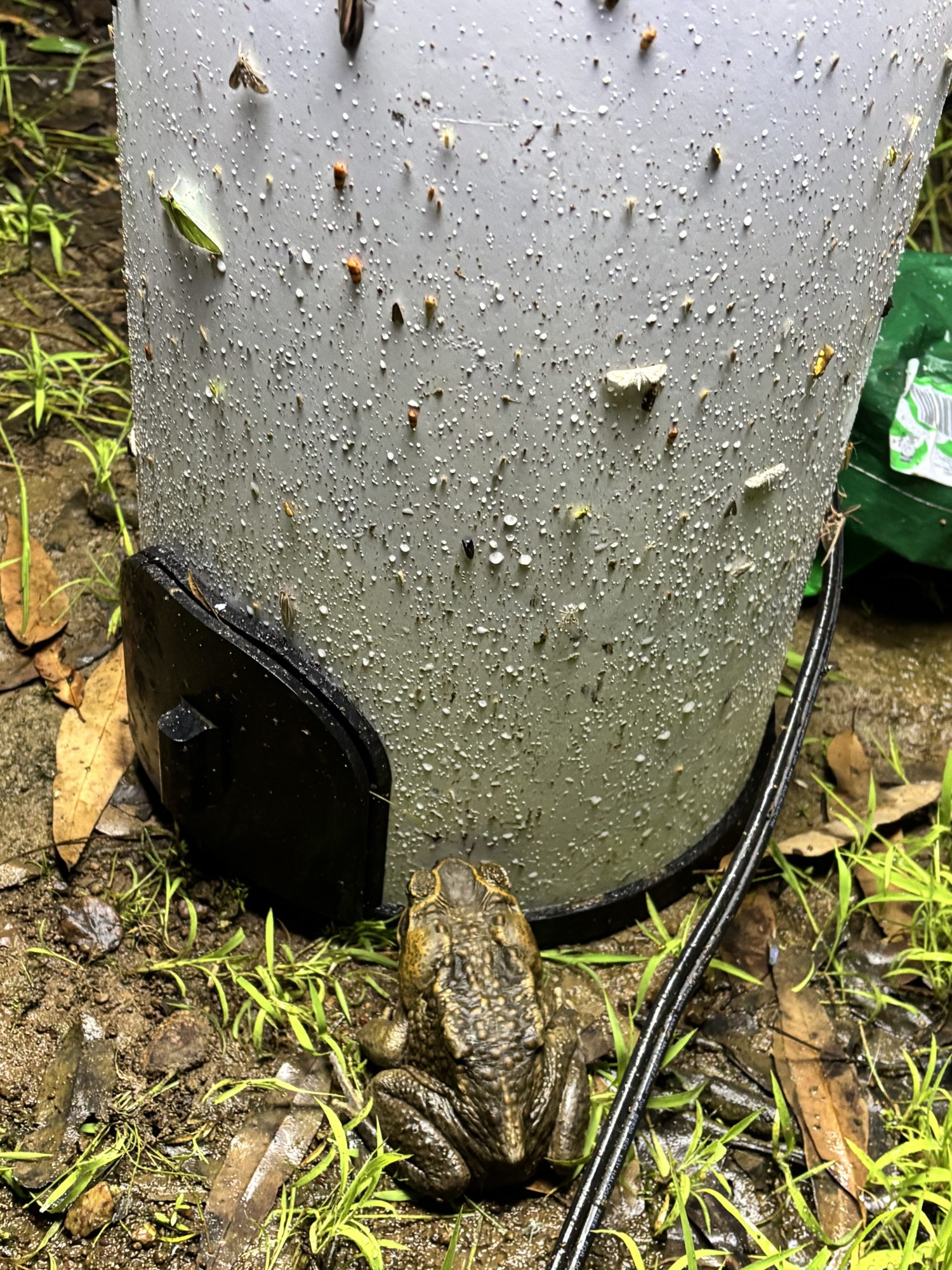
Managing pests species – cane toads and bujicat (cats) – on Wunambal Gaambera Country

In March 2026, Uunguu Rangers partnered with Thylation ecologists to trial new smart camera technology at Ngauwudu (Mitchell Plateau), as part of a collaborative research project focused on improving early detection of feral species. While the trial was conducted on the mainland at Ngauwudu, the technology is being developed for use on Wunambal Gaambera islands.

Managing pests species – cane toads and bujicat (cats) – on Wunambal Gaambera Country Read More »

WGAC 2025 Traditional Owner & Annual General Meeting

Wunambal Gaambera Aboriginal Corporation (WGAC) recently held their Traditional Owner (TO) Annual Meeting and Annual General Meeting (AGM) in Kalumburu on Tuesday 9th and Wednesday 10th December 2025. Day 1 – Traditional Owner Meeting The first day began with Bevan Stott presenting the Minutes from the 2024 AGM, followed by guest presentations from Alcoa and

WGAC 2025 Traditional Owner & Annual General Meeting Read More »

Dugong survey

Monitoring our Wundaagu; Mapping Dugongs & Seagrass

In August 2025, Uunguu Rangers completed a week of mapping and monitoring balguja (dugong) and jala (seagrass) in the Uunguu Indigenous Protected Area. This work is part of Project 4.6 under the NESP Marine and Coastal Hub—a collaboration between the Indigenous Saltwater Advisory Group (ISWAG) and James Cook University’s (JCU) TropWATER. Balguja are a target

Monitoring our Wundaagu; Mapping Dugongs & Seagrass Read More »

Scroll to Top